

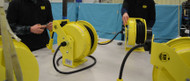
Industrial Retractable Cord Reel Selection Guide: How to Spec the Right Reel for Heavy-Duty & Commercial Applications
We often find that facilities begin evaluating retractable cord reels after experiencing recurring issues with cable wear, workspace organization, or changing equipment layouts. However, selecting the right reel involves more than simply choosing a desired cord length. Electrical load, environmental conditions, mounting constraints, and daily duty cycles all influence long-term performance. Understanding these factors early helps simplify the specification process and supports a more predictable equipment lifecycle.
Founded in 1960 and headquartered in Hamburg, New York, KH Industries has engineered industrial power products for more than 65 years, supporting maintenance managers and plant engineers with configurable solutions tailored to specific operating environments.When power delivery is properly structured, operations managers frequently experience smoother daily operations and more predictable maintenance schedules.
This guide details the practical steps we recommend for specifying an industrial reel that meets the precise demands of your operating environment.
Step 1- Define the Electrical Load: Amperage, Voltage, and Cable Gauge Requirements
We typically advise plant engineers to begin the specification process by evaluating the anticipated electrical load. A common specification oversight is selecting a reel based solely on its physical dimensions or payout length, rather than on the ampacity required by the connected equipment. Selecting the correct combination of amperage, voltage, and cable gauge helps maintain reliable power delivery.
If a cable gauge is too thin for the required run length and tool load, voltage drop can occur. This may cause connected motors to draw additional current during operation. Over time, this may lead to equipment overheating and reduced tool lifespans.
Understanding Slip Ring Ratings & Continuous Duty Cycles
The slip ring is the internal electrical component that transmits power from the stationary base of the mounting bracket to the rotating spool. Our cord reel platforms utilize slip ring assemblies designed to support long-term performance, particularly in continuous-duty applications where equipment draws consistent power over long shifts.
Many light-duty commercial reels utilize lower-rated slip rings intended for intermittent use. In contrast, heavy-duty applications require components built for sustained daily operation. We engineer our standard and custom assemblies to accommodate the heavy demands of automated manufacturing cells, municipal service vehicles, and utility fleets.These sustained-duty builds make up our line of heavy-duty industrial cord reels.
When evaluating a cord reel for continuous duty, it is standard practice to review derating guidelines for coiled cords. A cord that remains partially coiled on the spool generates more heat than a fully extended cord. Ensuring the selected wire gauge can safely handle the sustained load helps maintain overall equipment integrity. We cover how coiled-cord heat buildup affects safe amperage in our guide to amperage de-rating for fully coiled industrial reels.
Read More Benefits of Upgrading to a Heavy-Duty Industrial Cord Reel
Matching Cable Type to Application: SOOW, SJOW, W-Type
The cable jacket type dictates how well the cord withstands abrasion, incidental chemical exposure, and mechanical abuse. Matching the cable type to the specific work area helps reduce the frequency of cable replacements.
- SOOW Cable: Rated for 600V, this cable features a durable rubber jacket that resists oil, water, and rough handling. It is the standard choice for manufacturing floors, maintenance garages, and machining environments where cords frequently drag across concrete.
- SJOW Cable: Rated for 300V, this junior service cable is intended for lighter commercial applications. It is well-suited for clean assembly stations or indoor commercial logistics where cords do not experience severe mechanical stress
- W-Type Cable: Designed for heavy industrial power distribution, W-type cables feature thick, highly abrasion-resistant jackets. These are commonly used in demanding environments like heavy construction sites and heavy-duty industrial yards.
Typical Applications & Load Matrix
| Anticipated Load | Recommended Conductor Gauge | Recommended Cable Type | Recommended KH Series |
|---|---|---|---|
| Up to 20A | 14 AWG to 12 AWG | SJOW / SOOW | RTI Series |
| Medium-Duty Industrial | 14 AWG to 10 AWG | SOOW | RTI Series |
| Higher-Amperage Industrial | 8 AWG to 2 AWG | W-Type / SOOW | RTM Series |
Step 2: Match NEMA Enclosure Rating to the Environment
We find that an enclosure's NEMA rating defines its practical suitability for various environmental conditions. Installing a unit with an inadequate NEMA rating may expose internal components to dust, moisture, or corrosive agents, potentially increasing maintenance requirements over time.
- NEMA 2 (Indoor Use): Designed to offer a degree of protection against falling dirt and light dripping water. This rating is common in climate-controlled warehouses, indoor packaging lines, and assembly workstations.
- NEMA 4 (Indoor/Outdoor Wet): Built to withstand splashing water and hose-directed washdowns. These units are frequently used in food processing plants, agricultural facilities, and heavy equipment wash bays.
- NEMA 4X (Corrosive Environments): Provides the same water protection as NEMA 4, with added resistance to corrosion. NEMA 4X enclosures are suitable for coastal marine environments, saltwater exposure, and chemical processing areas.
NEMA 4X for Corrosive & Outdoor Environments: RTF Series Deep Dive
When buyers specify outdoor industrial cord reels, they look for specific features that resist environmental degradation while maintaining everyday reliability. We purpose-built our RTF Series to address these exact application requirements.
Our RTF Series features a 12-position adjustable 4-roller guide arm and is engineered for utility trucks, engine block heater stations, and outdoor service equipment. The NEMA 4X rating supports long-term use in corrosive environments, making it a standard choice for utility fleets and municipal vehicles. Integrating reliable NEMA 4X cord reel power stations into these demanding environments helps simplify exterior power distribution for field operators.
Step 3: Evaluate Mounting Configuration & Cable Payout Mechanism
The physical layout of a building or vehicle dictates how the reel should be mounted and how the cable should be dispensed. We recommend selecting the correct cord reel mounting orientation to help reduce cable drag, limit trip hazards, and improve the overall ergonomics of a workstation.
Common mounting orientations include ceiling, wall, bench, and crane or hoist mounts.
Once the mounting location is established, operations managers should choose the appropriate retraction mechanism to suit the workflow.
- Spring-Loaded Constant Tension: The cable remains under light, continuous tension at all times. This setup is commonly used for automated machine tool applications or moving hoist systems where cable slack needs to be managed continuously to prevent tangles.
- Ratchet Positive-Lock: The spool locks into place at specific intervals, allowing the operator to pull out the required length and work without fighting continuous pull-back tension. A short tug releases the lock for controlled retraction. Many of our standard units feature adjustable ratchets to customize this functionality based on the specific job requirement.
Swivel Bracket & Overhead Mount for Manufacturing Cell Applications
In active production environments, overhead mounting is often preferred to keep concrete floors entirely clear for forklift traffic and pallet jacks. Utilizing Retractable Extension Cord Reels on overhead swivel brackets allows operators in manufacturing cells to pull power from directly above their workstations, accommodating multi-directional movement.
This overhead setup significantly reduces the amount of cable dragging across abrasive floors, which naturally extends the lifespan of the SOOW jacket. Keeping cords elevated also helps facilities maintain standard safety practices regarding clear walkways.
Mounting height also affects how much cord actually reaches the work area, which we have explained in how ceiling height reduces a cord reel's usable reach Guide.
Step 4: Product Certifications and Verifying Site Requirements
When drafting a Request for Quote (RFQ), we advise buyers to clearly spell out the required certification marks to ensure the received bids meet local site requirements.
For heavy commercial and industrial operations, specifications should generally include requirements for a third-party NRTL (Nationally Recognized Testing Laboratory) certification, such as a UL listing mark or a CSA label. Checking for these labels before purchase helps facilities maintain a documented standard of workplace safety.
This standard of verification should apply across the entire facility footprint. Whether a site requires standard NEMA 2 reels for an indoor assembly line or heavy-duty industrial power products for an exterior wet bay, matching the equipment label to the environment matters. Proper documentation ensures the selected products align with operational realities and facility guidelines.
Read More Do Electrical Product Certifications Matter? What Every Industrial Buyer Must Know
Step 5: Factor in Total Cost of Ownership, Not Just Unit Price
We often counsel maintenance supervisors that decisions driven primarily by the initial unit price frequently result in higher long-term operational costs. In an industrial setting, the Total Cost of Ownership (TCO) incorporates the initial purchase price, the labor cost of installation, the frequency of required maintenance, and the financial impact of downtime when a unit needs replacement.
Replacing a budget-grade reel multiple times over five years creates hidden labor costs for the maintenance department and interrupts production flow. Heavy-duty reels designed with modular, easily available replacement parts offer a predictable, manageable lifecycle. When a component does wear out, being able to order a replacement slip ring or spring rather than discarding the entire unit significantly improves the overall TCO.
When an aging reel starts to show wear, our guide on retrofitting versus replacing an industrial cord reel helps maintenance teams decide which path lowers long-term cost.
Estimated 5-Year TCO Comparison
| Cost Factor | Certified Heavy-Duty Reel | Uncertified Budget Reel |
|---|---|---|
| Initial Purchase Price | Moderate to High | Low |
| Replacement Frequency | Minimal; engineered for long lifecycles | Frequent wear in industrial use |
| Maintenance Profile | Modular replacement parts available | Disposable; entire unit replacement is typical |
| Downtime Impact | Low; supports consistent production | Elevated risk of production stops |
| Documentation Availability | Product documentation typically available | Documentation may vary |
Read More Market Factors Affecting the Cost of Industrial Manufactured Goods: A Procurement Guide
KH Industries' Cord Reel Product Matrix: Matching Series to Application
Our standard KH Industries cord reel series - RTB, RTI, RTF, and RTM - are built to address specific environmental realities, preventing buyers from paying for features they do not need while ensuring they have the protection required for their site.
The matrix below outlines how each standard series aligns with common facility demands.
Common Environments & Recommended Use
| KH Industries Reel Series | Recommended Environment | NEMA Rating | Common Application |
|---|---|---|---|
| RTB Series | Indoor and light outdoor applications | NEMA 2 or NEMA 4 (depending on model) | Assembly stations, maintenance work areas |
| RTI Series | Indoor / Outdoor Wet | NEMA 4 | Food processing, vehicle washdown areas |
| RTF Series | Outdoor / Corrosive | NEMA 4X | Utility fleets, municipal vehicles, service trucks |
| RTM Series | Heavy Industrial / Wet | NEMA 4 | Crane hoists, heavy steel manufacturing |
Why Industrial Facilities Trust KH Industries for Retractable Cord Reels
Different facilities place different demands on cord reel systems. Some applications prioritize corrosion resistance, while others focus on continuous-duty power delivery or mounting flexibility. Our standard and configurable platforms span NEMA 2, 4, and 4X ratings, from 15A light-industrial to 50A heavy-duty builds, allowing buyers to match equipment specifications to the realities of their operating environment.
Choosing the right equipment does not have to be a complicated process. Evaluating your specific load requirements, physical layout, environmental exposure, and daily duty cycles can help you specify a solution that supports long-term operational stability.
Specifying the right reel often comes down to the details of amperage, mounting, and environment - talk to a KH Industries engineer to work through them, or request a quote once the requirements are clear.


