

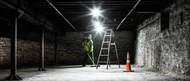
Top Picks for Explosion-Proof LED Lights in Hazardous Areas
Table of Contents
- Not All ‘Explosion Proof’ Labels Mean What You Think
- KH Industries HazRay™: Explosion-Proof LED Lights Built for Demanding Environments
- Understanding Hazardous Location Classifications: Class, Division, and Group
- What Makes a Light "Explosion Proof": The Engineering Behind the Certification
- Choosing by Application: Which Explosion-Proof Light Fits Your Environment?
- Portable vs. Fixed-Mount Explosion-Proof LED Lights: When to Use Each
- The Right Classification. The Right Certification. The Right Light
Not All ‘Explosion Proof’ Labels Mean What You Think
Standard industrial LED lights are not automatically suitable for hazardous locations. Where flammable gases, vapors, combustible dust, or ignitable fibers may be present, electrical equipment must meet the requirements of the area's hazardous classification. Selecting a light based on brightness, housing construction, or an "explosion-proof" product description alone does not establish that it is suitable for the installation.
Start by confirming the facility's Class, Division, and applicable Group classification. These designations identify the hazardous materials present and the conditions under which they may occur. The selected fixture must carry the approvals and ratings required for that specific area.
For buyers comparing the best explosion-proof LED lights for Class I Division 1 and Division 2 hazardous locations, the specification should begin with the facility's classified-area documentation. Once the classification is confirmed, buyers can evaluate light output, fixture format, power requirements, environmental protection, and certification.
KH Industries HazRay™ is a portable hazardous-location lighting range for classified industrial environments. The product family includes handheld lamps, multi-head fixtures, and configurable stringer lights, allowing maintenance teams to select a format based on the work area and required coverage. Explore the HazRay explosion-proof lighting range to review the available formats and application information.
KH Industries HazRay™: Explosion-Proof LED Lights Built for Demanding Environments
KH Industries HazRay™ is a range of explosion-proof LED lighting designed for classified industrial environments where the fixture must meet the area's electrical and environmental requirements. The current product lineup includes portable handheld lamps, multi-head fixtures, and configurable stringer lighting.
HazRay fixtures are designed for Class I Division 1 and Division 2 hazardous locations. The product family is listed as UL 844 certified and CSA C22.2 No. 137 certified, with NEMA 4X and IP66 environmental ratings. These ratings address different requirements: the hazardous-location certification relates to suitability for classified environments, while NEMA 4X and IP66 describe environmental protection. Neither environmental rating replaces the need to verify the fixture's hazardous-location approval.
Which HazRay configuration fits the work area?
1. Single handheld LED lamp
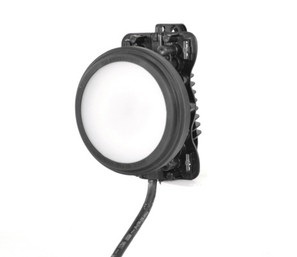
The HazRay Single Handheld LED Lamp is a portable fixture weighing less than 2 lb. It is designed for technicians who need to carry illumination into smaller work areas and confined spaces.
The handheld Lamp has a factory-sealed LED light source and a replaceable protective lens. Variable wattage and voltage configurations are available. The handheld lamp is useful for Class I Division 1 and Division 2 applications and lists NEMA 4X and IP66 ratings.
2. Multi-head LED lighting
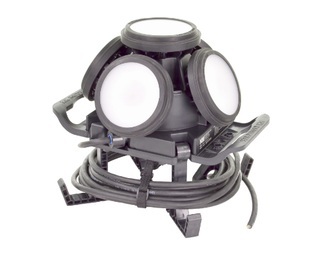
For broader illumination, the HazRay Multi-Head LED Light is available in configurations with one to six stackable LED heads.
A listed five-head model, HazRay Multi-Head Light, Model HRD117C-PAAA05-B16K, uses a 50 ft, 16/3 SOOW cord and provides 8,500 lumens. It has a blunt-cut feed cord, allowing the electrical connection to be selected for the application. The required hazardous-location plug must be specified separately where applicable.
This configuration gives maintenance teams a portable lighting option for work areas that need broader coverage than a single handheld fixture provides.
3. Stringer and feed-through lighting
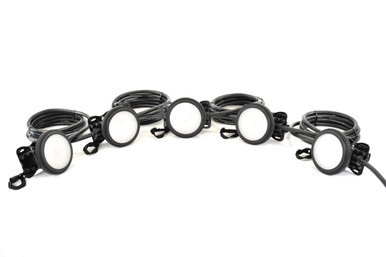
The HazRay Stringer/Feed-Through Lighting range is designed to distribute illumination along larger work areas. It is relevant to temporary maintenance work, extended work zones, and applications where multiple lamp heads are needed along a route.
For example, the HazRay LED Stringer, Model HSD117C-SAAB05-B12S has five lamp heads, 10 ft spacing, a 50 ft feed cord, and 90 ft of overall cord length. Its listed output is 8,500 lumens. A separate 25 ft feed-cord configuration, Model HSD117C-SAAA05-B12N, provides 65 ft of overall cord length.
The number of heads, cord length, spacing, and connection requirements should be selected according to the work area and the applicable electrical classification.
HazRay product ratings and configuration considerations
When comparing HazRay configurations, review the following product details against the facility's requirements:
- Hazardous-location suitability: Designed for Class I Division 1 and Division 2 applications. Confirm the exact Group and temperature code required for the installation.
- Certifications: UL and CSA. Verify the listing marks on the exact fixture and configuration.
- Environmental protection: NEMA 4X and IP66 ratings.
- Power: 120 V is standard, with variable voltage options on select models.
- Light output: The current product range includes configurations from a 1,700-lumen handheld lamp to multi-head and stringer options providing up to 8,500 lumens.
- Configuration: Cord length, lamp-head count, spacing, and selected electrical options vary by product and configuration.
- Manufacturing: HazRay lighting is manufactured in the United States.
For buyers comparing top-rated explosion-proof LED work lights for oil and gas, chemical, and pharmaceutical facilities, the exact fixture rating and configuration matter more than a general product-family description. The HazRay specification sheet and product documentation provide additional information for evaluating individual configurations.
KH Industries also has a HazRay stringer project designed for an extended tunnel. The original 256 ft, 18-head stringer was later returned to the factory and divided into six separate stringers while maintaining its Class I Division 1 compliance. The Hazardous Location Stringer Takes on Many Forms case study illustrates how a custom lighting configuration can address a specific industrial application.
Understanding Hazardous Location Classifications: Class, Division, and Group
Hazardous-location classifications identify the type of material that may create a fire or explosion hazard and the conditions under which it may be present. Buyers must understand these designations before selecting explosion-proof LED lights or other electrical equipment for a classified area.
Under the National Electrical Code classification system, hazardous locations are divided into three Classes.
| Classification | Type of hazardous material | General description |
|---|---|---|
| Class I | Flammable gases or vapors | Locations where flammable gases or vapors may be present in sufficient quantities to create an ignition hazard. |
| Class II | Combustible dust | Locations where combustible dust may create an ignition or explosion hazard. |
| Class III | Ignitable fibers or flyings | Locations where easily ignitable fibers or flyings may be present, although they are not normally suspended in the air in quantities that produce ignitable mixtures. |
What do Division 1 and Division 2 mean?
Within the Class and Division system, Divisions describe the conditions under which the hazardous material may be present.
- Division 1: The hazardous material may be present under normal operating conditions, or may frequently be present because of maintenance, repair, leakage, or process conditions.
- Division 2: The hazardous material is normally contained or controlled and is expected to become hazardous only under abnormal conditions, such as equipment failure or a breakdown in a containment system.
The distinction is important when selecting lighting. A fixture approved for one classification must not be assumed suitable for another without checking its actual certification and rating.
What do Groups A, B, C, and D mean?
Groups identify the specific gases or vapors associated with Class I hazardous locations. The group designation is part of the equipment selection process because different gases and vapors have different ignition characteristics.
A fixture's Class and Division rating alone may not provide enough information to establish suitability. Buyers should also verify the required gas group and temperature code against the equipment's documentation.
The HazRay C1D1 identifies Groups C and D for its Class I Division 1 lighting. Do not extend that specific Group rating to every HazRay configuration or assume it covers other groups. Confirm the exact model's listing and documentation before installation.
The facility's classification must guide product selection. OSHA requires hazardous locations to be classified according to the properties of the materials present and the likelihood that hazardous concentrations will occur. Each area must be considered individually. Consult a qualified electrical engineer or other qualified professional when interpreting the facility's classification.
What Makes a Light "Explosion Proof": The Engineering Behind the Certification
An explosion-proof light is not simply a standard LED fixture with a thicker housing. Its construction and certification are intended to prevent an internal ignition from igniting the surrounding hazardous atmosphere.
The engineering involves several considerations:
1. Containment
The enclosure is designed to contain an internal ignition or explosion under the conditions covered by its certification. Its construction and assembly must meet the requirements of the applicable hazardous-location standard.
2. Flame paths and enclosure design
The enclosure's joints and openings are engineered as part of the protection method. Their design helps control the passage and cooling of gases from an internal ignition so that the surrounding atmosphere is not ignited. The enclosure should not be modified or opened in a way that compromises its certified construction.
3. Thermal management
Electrical and lighting equipment produces heat. In a classified location, the equipment's maximum surface temperature must remain suitable for the materials present. The temperature code or T-rating helps establish whether the fixture is appropriate for the ignition characteristics of the hazardous atmosphere.
4. Product certification
UL is a standard used for hazardous-location luminaires. Certification to the applicable standard involves evaluation of the fixture's construction and performance. KH Industries lists UL and CSA certifications for HazRay lighting. Buyers should verify the specific listing marks and ratings on the exact model.
A product's enclosure rating is not the same as its hazardous-location certification. NEMA 4X and IP66 describe environmental protection against conditions such as water and dust ingress; they do not independently establish that a fixture is suitable for a classified area.
KH Industries provides clear information about its quality processes and testing for buyers to evaluate. Its article on hazardous-location lighting regulations also explains why classification, temperature ratings, and product documentation matter when selecting lighting.
Choosing by Application: Which Explosion-Proof Light Fits Your Environment?
The right fixture depends on the hazardous-area classification, the work being performed, the required illumination, and whether the light needs to move with the maintenance team or remain in a designated location.
When selecting explosion-proof LED lighting for hazardous classified areas, match it to the area's documented classification. Then compare the fixture's certification, Group rating, temperature code, power requirements, and light distribution.
| Application | What buyers should evaluate | Lighting considerations |
|---|---|---|
| Oil refineries and petrochemical facilities | Identify the classified process area, gas group, temperature code, and whether the work involves routine operations or temporary maintenance. | Portable handheld lights can support localized inspection, while multi-head or stringer configurations may be appropriate for larger maintenance areas when their exact ratings match the classification. |
| Chemical plants | Review the chemicals handled, the classified boundaries, the applicable Class and Division, and the required Group. Different process areas may have different classifications. | Select the fixture only after confirming its listing against the area's classification. Portable configurations can support inspection and maintenance work. |
| Pharmaceutical facilities | Assess solvent-handling areas, storage, processing equipment, and the facility's documented hazardous-area boundaries. Do not assume the entire facility has one classification. | The required fixture depends on the specific classified area and the lighting coverage needed for the task. |
| Grain handling and food processing | Determine whether combustible dust creates a Class II hazardous location and identify the applicable Division and Group. | Do not assume a Class I HazRay fixture is suitable for a Class II dust location. Verify that the selected product is specifically approved for the required classification. |
| Paint booths and finishing areas | Confirm the materials used, ventilation arrangements, spray operations, and the classification of each area. | Match the light's Class, Division, Group, and temperature code to the documented requirements. Portable lighting may be useful for temporary maintenance when the exact fixture is approved for the area. |
| Mining and energy operations | Identify whether the hazard involves flammable gases, combustible dust, or another classified condition. Review the classification of each work area. | HazRay is listed for Class I Division 1 and Division 2 applications. Other classifications require separate verification and an appropriately approved fixture. |
The industry alone does not determine the hazardous classification. A refinery, chemical plant, pharmaceutical facility, or mine can contain areas with different classifications, or areas that are not classified. The facility's electrical documentation must guide the selection.
KH Industries supports industrial applications across mining, oil, gas, energy, petroleum, manufacturing, and commercial kitchens and food manufacturing.
Portable vs. Fixed-Mount Explosion-Proof LED Lights: When to Use Each
The choice between portable and fixed-mount hazardous-location lighting depends on whether the illumination is needed at a permanent work position or across changing work areas.
Portable explosion-proof lighting
Portable fixtures are useful when maintenance teams need to move lighting between work locations. Typical applications include:
- Turnarounds and shutdowns may require temporary lighting across changing work areas.
- Equipment inspections and repairs often require portable illumination near the work being performed.
- Temporary maintenance areas may need lighting that can be repositioned as work progresses.
- Confined-space work requires fixtures specifically approved for the classified area and the applicable entry requirements.
- Extended work zones may require connected lighting configurations to provide coverage along the work area.
HazRay's handheld, multi-head, and stringer configurations provide different portable lighting formats. A handheld lamp can move with a technician, a multi-head fixture can provide broader task coverage, and a stringer can distribute light along a larger work area.
For example, the HazRay five-head LED stringer provides 8,500 lumens across its listed configuration. The cord length and lamp-head spacing should be matched to the work area and power connection.
Fixed-mount explosion-proof lighting
Fixed-mount fixtures are generally considered for permanent classified areas, process locations, storage areas, and loading zones where lighting needs to remain in a designated position.
Selection requires confirmation of the mounting arrangement, area classification, fixture certification, electrical supply, and maintenance access. A permanent installation should be specified according to the facility's electrical design and applicable requirements.
When a facility needs both
Large industrial facilities may use fixed lighting for routine operations and portable hazardous-location lights for inspections, repairs, and temporary maintenance work. These systems serve different purposes and should be selected independently according to the classification and lighting requirements of each area.
KH Industries' guide to HazRay lighting for hazardous industries explains how the portable product formats support different industrial lighting tasks. For other temporary and portable lighting applications outside classified areas, KH Industries also offers industrial portable lighting products.
The Right Classification. The Right Certification. The Right Light
Selecting the best explosion-proof LED lights for Class I Division 1 and Division 2 hazardous locations begins with the facility's documented classification, not a product label or brightness rating. Buyers must verify the Class, Division, Group, temperature code, and applicable certifications before choosing a fixture.
For teams evaluating top-rated explosion-proof LED work lights for oil and gas, chemical, and pharmaceutical facilities, KH Industries HazRay™ offers portable handheld, multi-head, and stringer lighting configurations for Class I Division 1 and Division 2 applications.
The HazRay range includes UL and CSA certifications, along with NEMA 4X and IP66 environmental ratings. Buyers should verify the applicable listing marks, Group rating, and temperature code for the exact fixture and configuration before installation.
When needed to assess how to choose explosion-proof LED lighting for hazardous classified areas, KH Industries can help review the application and identify a suitable HazRay configuration based on the site's requirements.
Contact KH Industries to discuss the required application, request a quote, or become a KH Industries customer.
Also, explore KH Industries' Utility & First Responder Fleet solutions for additional vehicle-mounted lighting and power solutions designed around fleet applications.


